
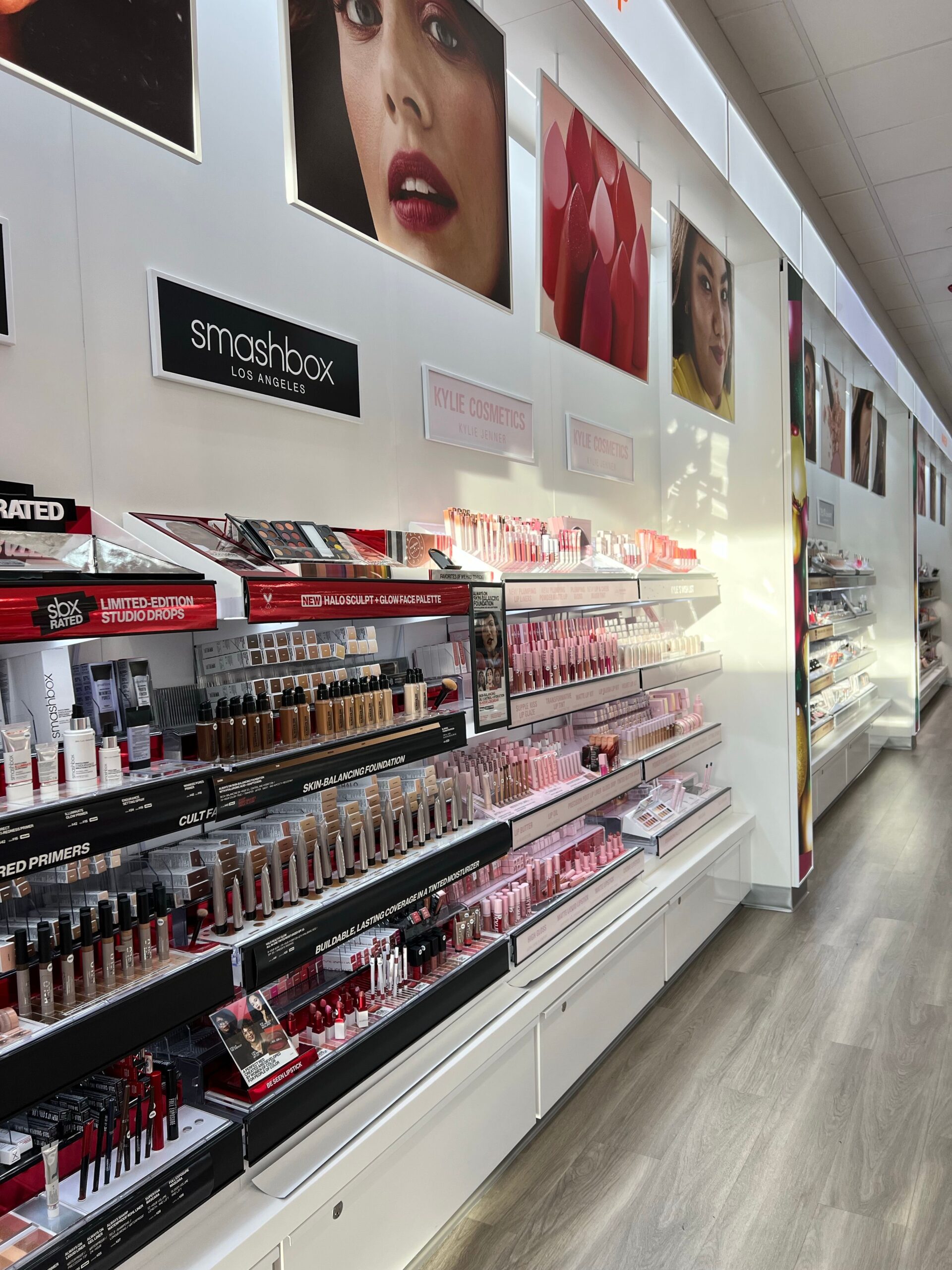

Is Big Box Retail A Brand Builder, Or Destroyer?

Well, I Guess That Depends on Who Runs Your Business...

I hear it all the time!  I could name them all, literally every beauty retailer, because I’ve heard them all called out in conversations. 

They say, “Ulta, Sephora, Big Box…. don’t waste your time.  They bankrupt you.”

Sure, retailers are demanding, expensive, high-maintenance, high-touch, reactive, and yes…. full of returns, but that’s the nature of Big Box retail. It’s wild, untamed, ferocious, and you’ve got to know exactly what you’re walking into before you get in bed with the beast.

Not to be confused with the biblical reference, “Man shall not lay with beast.”  Some, especially now days, we’ve got to get in bed with!

In my experience, what will bankrupt your business is narcissism, poor financial or product planning, unrealistic EBITDA expectations, over-acceleration without access to quick capital, and putting the wrong people in the wrong positions. 

Here’s the deal: growth requires infrastructure, and infrastructure requires investment. The right time to build the plan isn’t when you’re struggling to keep up. It’s before the acceleration happens, so you’re ready to activate when-and if-it does.

You can’t blame reactive retail on Force Market Majeure™, which is my new term that I’m coining and, for all legal purposes, defining as stated herein below:

Force Market Majeure™ (noun)When sh*! hits the fan and you, the brand, the retailer, or the market itself have to make other plans. The unexpected forces that shift, disrupt, and cause chaos overnight, turning even the most beautiful business plan upside down whether it’s caused by successful acts of GOD, idiots, @$$holes, or just some very smart and calculated competitors.

Retail doesn’t ask permission. It reacts for the greater good of the collective.

You may have the tightest 365-degree plan in the business, accounting for every day of the year, but did you plan for inclement weather?  Retail is a money market and a pay-to-play market, and even the best-laid plans can get caught in a Force Market Majeure™ that no forecast saw coming.

So, save for a rainy day. Protect a percentage of operating cash that isn’t treated as free-spending capital and build enough flexibility into your business to weather the unexpected.

I know – I know, right away you want to run to La Perla and trade up prix élevé, to keep your Beast happy, but don’t forget they have other partners too so before you do that happy dance you better get your act tight because it’s a talent show too.  Just looking pretty won’t keep you together

Your forecast may call for sunshine but make sure your Chief Forecasting Officer or (CFO) is accounting for the storms because there are so many ways Force Market Majeure™ will blow you out of business and no matter its size.  

Did you launch into Big Box retail bootstrapped, you know…. those Pretty Woman long legged patent boots, expecting to make it to the finish line without a capital partner or adequate access to working capital? Richard Gears need money to spin!

Are you the Type A who was so focused on the sell-in revenue and getting onto the shelf that you forgot to build the sell-through infrastructure that generates the next purchase order and the continued revenue you’ll need to keep paying the bills long after launch?

Did you fail to manage your aging inventory until you suddenly found yourself in a desperate position—forced to liquidate at a loss just as you need cash to place new production orders, only to discover that the liquidation proceeds won’t even cover what comes next?

Getting into retail requires money. Staying in retail requires cash flow. And getting out of an inventory problem usually costs you both.

Here’s another problem that’s becoming more and more relevant in the age of social media.

Maybe you’re already becoming a major retail player—merchandised across 1,500 full-fleet doors with a #1 hero product generating 70% of your brand’s volume.  Then Force Market Majeure™ strikes with the viral plague.

A competitor explodes overnight and consumer attention shifts. Your hero SKU loses 50% of its business, and suddenly the economics supporting your entire organization have changed. Your retail P&L slips into the red, the brand moves toward net negative, and the overhead, headcount, marketing commitments, and SG&A built around yesterday’s volume now have to be unwound around today’s reality.

Did you consider that no one product can stay at the top forever? Did you continue living in a utopia you thought was unbreakable?  

That’s the market. It doesn’t care! 

Retailers live and die by productivity and how much revenue they can generate from every door, every square foot, every shelf, and every SKU they put into play. Their ability to scale depends on continually making that real estate work harder, smarter, and more profitably.

As a brand, you should be just as obsessed with your own productivity and sell-through, not just your sell-in, so when your retail partner grows, you have an invite opportunity to grow right alongside them. 

You have to earn your real estate.  If the retailer hits a slowdown and your brand is underperforming, taking up valuable space, tying up inventory, or dragging down category productivity, you shouldn’t be surprised when someone starts sharpening the axe. 

Your job is to protect your brand—to understand your numbers, defend your productivity, react quickly, invest intelligently, evolve your assortment, and keep pace with the retailer you chose to get into business with.  Nobody forced you onto that shelf.  This is what you signed up for.

Big Box retail can give you enormous reach, credibility, customer acquisition, and scale, but shelf space isn’t a lifetime appointment.

And if you don’t know how to beauty…

Then first, you need to learn how to do your makeup properly.

The Top 5 Problems, & Your Top 10 Problem Solvers

1. Cashflow & working-capital failure

2. Inventory gone wrong

3. Not knowing your true cost of retail

4. Scaling SG&A and infrastructure too fast

5. SKU concentration and penetration risk

1. Get Identified.
- Know your identity.
- Know your customer.
- Know your competitive advantage.
- Know why you exist and exactly where you belong in the market.

If you can’t clearly articulate why a retailer, and more importantly their customer, needs you then you’re not ready for the shelf.

2. Get Educated.
Know the business you’re getting into and make sure your pricing structure allows for profitable growth. Understand margins, freight, returns, allowances, markdowns, testers, sampling, promotions, payment terms, chargebacks, inventory requirements, marketing expectations, and the real cost of doing business at scale. 

3. Get Funded.
Growth eats cash. Make sure you have access to enough working capital to manufacture inventory, support marketing, hire appropriately, build infrastructure, and survive the gap between shipping millions of dollars of product and actually getting paid for it.

4. Get Planned.
Build the plan for success before success arrives. What happens if you double your business? Triple it? What happens if your hero SKU goes viral—or suddenly stops selling? Have contingency plans for both acceleration and contraction.

5. Get Productive.
Know your sales per door, sales per SKU, inventory turns, weeks of supply, gross margin, return rates, promotional lift, category ranking, and contribution to the retailer’s overall business. Don’t wait for the merchant to tell you that you have a productivity problem.

6. Get In the Conversation.
Getting onto the shelf is not the finish line—it’s the starting line. Support the business. Sample. Educate. Merchandise. Promote. Activate. Acquire!

7. Get the Right People in the Right Seats.
A founder cannot, and should not, do everything. Surround yourself with people who understand the functions they’re responsible for and give them the authority to do their jobs.

8. Get Real.
Your forecast is not a fact. Your valuation is not your bank balance. Revenue is not EBITDA, and retail sales are not wholesale revenue. Ego has no place in a P&L. Look at the numbers as they are, not as you hoped they would be. 

9. Get Reactive, Not Inactive.
The market moves. Consumers move. Retailers move. Competitors move. You need to move, too!  When the numbers turn, don’t let fear, anger, ego, or frustration make expensive decisions for you. Before you pull out of a retailer, slash investment, burn a bridge, or walk away from the business, understand what’s actually happening.  Budget for the storm before there’s a cloud in the sky.

10. Get Accountable.
Your retailer is responsible for protecting their business. You are responsible for protecting yours. If the partnership stops working, understand why before assigning blame. Sometimes the retailer made the wrong decision. Sometimes the market changed. And sometimes, if we’re willing to look in the mirror, our makeup just wasn’t applied properly.  Big Box retail isn’t necessarily what puts brands out of business. Going into Big Box retail without understanding what it takes to stay there can.  So, before you blame the beast, make sure you were actually prepared to feed its appetite.

Sink or Swim....?
Get in the
BOXXXOXOXO!

A Big Box Beauty xeclusive article written by Dominick Briguglio, CCO of Big Box Beauty
published on 9/10/2026

Well I Guess That Depends On Who Runs Your Business...

I hear it all the time!  I could name them all, literally every beauty retailer, because I’ve heard them all called out in conversations. 

They say, “Ulta, Sephora, Big Box…. don’t waste your time.  They bankrupt you.”

Sure, retailers are demanding, expensive, high-maintenance, high-touch, reactive, and yes…. full of returns, but that’s the nature of Big Box retail. It’s wild, untamed, ferocious, and you’ve got to know exactly what you’re walking into before you get in bed with the beast.

Not to be confused with the biblical reference, “Man shall not lay with beast.”  Some, especially now days, we’ve got to get in bed with!

In my experience, what will bankrupt your business is narcissism, poor financial or product planning, unrealistic EBITDA expectations, over-acceleration without access to quick capital, and putting the wrong people in the wrong positions. 

Here’s the deal: growth requires infrastructure, and infrastructure requires investment. The right time to build the plan isn’t when you’re struggling to keep up. It’s before the acceleration happens, so you’re ready to activate when-and if-it does.

You can’t blame reactive retail on Force Market Majeure™, which is my new term that I’m coining and, for all legal purposes, defining as stated herein below:

Force Market Majeure™ (noun)When sh*! hits the fan and you, the brand, the retailer, or the market itself have to make other plans. The unexpected forces that shift, disrupt, and cause chaos overnight, turning even the most beautiful business plan upside down whether it’s caused by successful acts of GOD, idiots, @$$holes, or just some very smart and calculated competitors.

Retail doesn’t ask permission. It reacts for the greater good of the collective.

You may have the tightest 365-degree plan in the business, accounting for every day of the year, but did you plan for inclement weather?  Retail is a money market and a pay-to-play market, and even the best-laid plans can get caught in a Force Market Majeure™ that no forecast saw coming.

So, save for a rainy day. Protect a percentage of operating cash that isn’t treated as free-spending capital and build enough flexibility into your business to weather the unexpected.

I know – I know, right away you want to run to La Perla and trade up prix élevé, to keep your Beast happy, but don’t forget they have other partners too so before you do that happy dance you better get your act tight because it’s a talent show too.  Just looking pretty won’t keep you together

Your forecast may call for sunshine but make sure your Chief Forecasting Officer or (CFO) is accounting for the storms because there are so many ways Force Market Majeure™ will blow you out of business and no matter its size.  

Did you launch into Big Box retail bootstrapped, you know…. those Pretty Woman long legged patent boots, expecting to make it to the finish line without a capital partner or adequate access to working capital? Richard Gears need money to spin!

Are you the Type A who was so focused on the sell-in revenue and getting onto the shelf that you forgot to build the sell-through infrastructure that generates the next purchase order and the continued revenue you’ll need to keep paying the bills long after launch?

Did you fail to manage your aging inventory until you suddenly found yourself in a desperate position—forced to liquidate at a loss just as you need cash to place new production orders, only to discover that the liquidation proceeds won’t even cover what comes next?

Getting into retail requires money. Staying in retail requires cash flow. And getting out of an inventory problem usually costs you both.

Here’s another problem that’s becoming more and more relevant in the age of social media.

Maybe you’re already becoming a major retail player—merchandised across 1,500 full-fleet doors with a #1 hero product generating 70% of your brand’s volume.  Then Force Market Majeure™ strikes with the viral plague.

A competitor explodes overnight and consumer attention shifts. Your hero SKU loses 50% of its business, and suddenly the economics supporting your entire organization have changed. Your retail P&L slips into the red, the brand moves toward net negative, and the overhead, headcount, marketing commitments, and SG&A built around yesterday’s volume now have to be unwound around today’s reality.

Did you consider that no one product can stay at the top forever? Did you continue living in a utopia you thought was unbreakable?  

That’s the market. It doesn’t care! 

Retailers live and die by productivity and how much revenue they can generate from every door, every square foot, every shelf, and every SKU they put into play. Their ability to scale depends on continually making that real estate work harder, smarter, and more profitably.

As a brand, you should be just as obsessed with your own productivity and sell-through, not just your sell-in, so when your retail partner grows, you have an invite opportunity to grow right alongside them. 

You have to earn your real estate.  If the retailer hits a slowdown and your brand is underperforming, taking up valuable space, tying up inventory, or dragging down category productivity, you shouldn’t be surprised when someone starts sharpening the axe. 

Your job is to protect your brand—to understand your numbers, defend your productivity, react quickly, invest intelligently, evolve your assortment, and keep pace with the retailer you chose to get into business with.  Nobody forced you onto that shelf.  This is what you signed up for.

Big Box retail can give you enormous reach, credibility, customer acquisition, and scale, but shelf space isn’t a lifetime appointment.

And if you don’t know how to beauty…

Then first, you need to learn how to do your makeup properly.

The Top 5 Problems, &
Your Top 10 Problem Solvers

1. Cashflow & working-capital failure

2. Inventory gone wrong

3. Not knowing your true cost of retail

4. Scaling SG&A and infrastructure too fast

5. SKU concentration and penetration risk

So, Sink or Swim...?
Get in the
BOXXXOXOXO!

A Big Box Beauty xeclusive article written by Dominick Briguglio, CCO of Big Box Beauty
published on 9/10/2026

1. Get Identified.
- Know your identity.
- Know your customer.
- Know your competitive advantage.
- Know why you exist and exactly where you belong in the market.

If you can’t clearly articulate why a retailer, and more importantly their customer, needs you then you’re not ready for the shelf.

2. Get Educated.
Know the business you’re getting into and make sure your pricing structure allows for profitable growth. Understand margins, freight, returns, allowances, markdowns, testers, sampling, promotions, payment terms, chargebacks, inventory requirements, marketing expectations, and the real cost of doing business at scale. 

3. Get Funded.
Growth eats cash. Make sure you have access to enough working capital to manufacture inventory, support marketing, hire appropriately, build infrastructure, and survive the gap between shipping millions of dollars of product and actually getting paid for it.

4. Get Planned.
Build the plan for success before success arrives. What happens if you double your business? Triple it? What happens if your hero SKU goes viral—or suddenly stops selling? Have contingency plans for both acceleration and contraction.

5. Get Productive.
Know your sales per door, sales per SKU, inventory turns, weeks of supply, gross margin, return rates, promotional lift, category ranking, and contribution to the retailer’s overall business. Don’t wait for the merchant to tell you that you have a productivity problem.

6. Get In the Conversation.
Getting onto the shelf is not the finish line—it’s the starting line. Support the business. Sample. Educate. Merchandise. Promote. Activate. Acquire!

7. Get the Right People in the Right Seats.
A founder cannot, and should not, do everything. Surround yourself with people who understand the functions they’re responsible for and give them the authority to do their jobs.

8. Get Real.
Your forecast is not a fact. Your valuation is not your bank balance. Revenue is not EBITDA, and retail sales are not wholesale revenue. Ego has no place in a P&L. Look at the numbers as they are, not as you hoped they would be. 

9. Get Reactive, Not Inactive.
The market moves. Consumers move. Retailers move. Competitors move. You need to move, too!  When the numbers turn, don’t let fear, anger, ego, or frustration make expensive decisions for you. Before you pull out of a retailer, slash investment, burn a bridge, or walk away from the business, understand what’s actually happening.  Budget for the storm before there’s a cloud in the sky.

10. Get Accountable.
Your retailer is responsible for protecting their business. You are responsible for protecting yours. If the partnership stops working, understand why before assigning blame. Sometimes the retailer made the wrong decision. Sometimes the market changed. And sometimes, if we’re willing to look in the mirror, our makeup just wasn’t applied properly.  Big Box retail isn’t necessarily what puts brands out of business. Going into Big Box retail without understanding what it takes to stay there can.  So, before you blame the beast, make sure you were actually prepared to feed its appetite.

Check out our other articles

If you market to Alpha, and Gen Z consumers, then you definitely want to read this….

Well we’ve got a heat map to show you exactly that!   Check out the latest data on who’s spending the most money on beauty.

Mexico is always camera ready for a drama queen performance, and we thank them for still wearing full glam for breakfast!

Contact Us

© 2026 all rights reserved Big Box Beauty LLC, a California company